
En la imagen
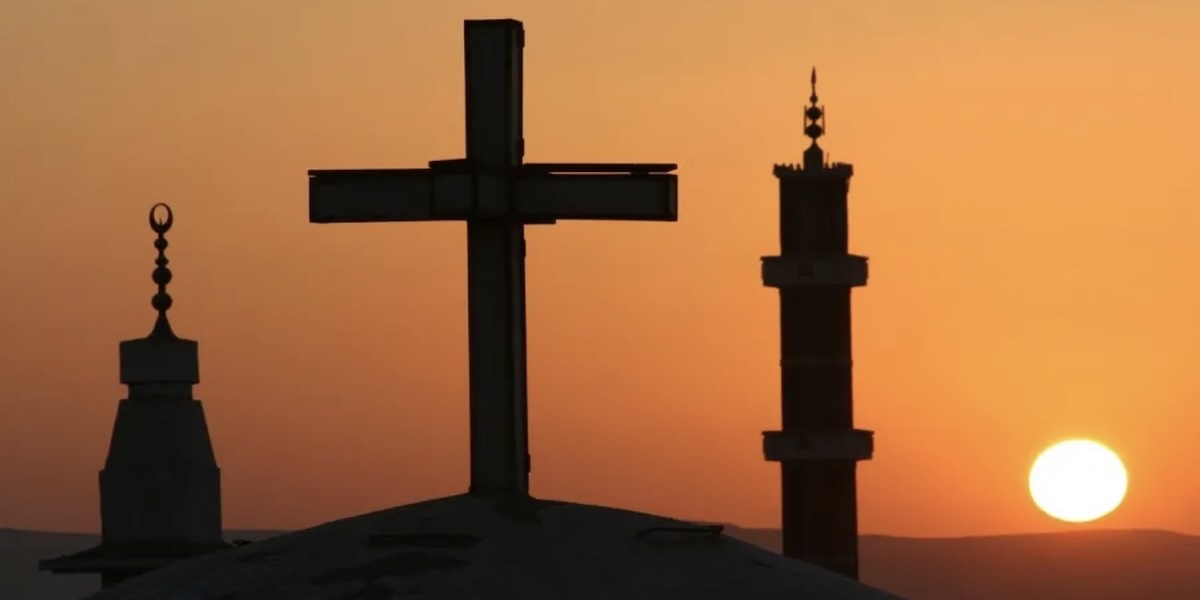
Mosque and church in the skyline of the Senegalese towns [Senegal Shuttle]
Senegal has often been called a “stable and tolerant exception”[1] in West Africa, and a model of peaceful coexistence in the Sahel region; a reputation built on its enduring peace, pluralism, a cooperative mindset of state authority and significant interfaith collaboration—qualities that distinguish it from its neighbors. This status reflects a distinctive social landscape shaped by the interplay of tightly organized Sufi brotherhoods, Christian communities, inclusive political institutions and governance, and a pragmatic adaptation approach that ensures stability, pluralism[2] and ‘teranga’.[3]
Senegal’s Constitution explicitly defines Senegal as a secular state that respects all beliefs.[4] This declaration, however, does not remove the country’s deep religious substrate;[5] in fact, religious groups still influence lawmaking and can even promote or limit reforms, like in the case of the 1972 Family Code.[6]
The relationship between religious orders, confessions and the state is not one of domination, but one of cooperation. Politicians and ‘marabouts’ act as intermediaries who often legitimize each other’s authority. Stephan refers to this phenomenon of mutual respect, recognition, integration in governance and dialogue as “multiple secularism”.[7]
In the hostile Sahel environment, Senegal remains stable and harmonious but faces significant fiscal and financial pressures. Its IMF program was suspended after audits revealed hidden debts and higher-than-reported deficits, driving public debt near 120% of GDP and a projected fiscal deficit of 7–8% in 2025.[8] Fiscal constraints and halted concessional lending limit social investment, worsening climate and resource pressures. Expected oil and gas revenues may support GDP growth (6–8%), yet persistent unemployment, external debt, trade imbalances, and inflation continue to constrain inclusive prosperity despite price caps and subsidies. Regional instability, including insecurity, military coups, extremist attacks, and humanitarian crises, amplify security and migration challenges for Senegal.
Despite these constraints, Senegal stands firm and peaceful. The country has never suffered extremist terrorist attacks, nor a military coup since independence, is considered a mature democracy, and is regularly cited for the quality of its political institutions and the persistent legitimacy of its government.[9] Senegal continues to distinguish itself as the region’s most stable and resilient state, frequently acting as a pivotal mediator and positive exception in a volatile surrounding.
This analysis examines how Senegal’s unique legacy of dialogue and cooperation between state and faith-based authorities has enabled the country’s flourishing contemporary interfaith dialogues. It further assesses how this cooperative framework has underpinned Senegal’s national stability and peace, positioning the country as a role model for religious coexistence in the Sahel and beyond. The analysis begins by mapping the current religious landscape, then examines the historical development of the country’s interreligious relations and the evolving partnership between political authorities, Muslim and Christian leadership. Finally, it investigates recent interfaith cooperation trends and methods, such as CIRSP, and how this engagement contributes to making the state stronger and in upholding Senegal’s stability and resilience through dialogue.
Mapping the religious landscape
Senegal, like its Sahelian neighbors, has a predominantly Muslim population, with about 94% of citizens adhering to Islam. The vast majority of Senegalese Muslims are Sunni (Maliki school), affiliated with one of the four main Sufi brotherhoods (‘confréries’)—the Tijanis (51%), Mourides (30%), Qadiriyya (10%), and Layenism (6%).[10] Each ‘tariqa’[11] has its own founder, teachings, rituals and is led by a hierarchical structure. Under the ‘cheikh’ (the original founder) stands the head of the lining order, the ‘khalife général’, who is the supreme religious authority for the brotherhood, as he is usually a direct descendent of the founder. He is followed by the ‘marabouts’, who are mainly local spiritual guides.[12]
The brotherhoods structure daily life, community relations, politics, and emphasize spiritual discipline, community and loyalty to their leaders. Their strong influence supports the maintenance of social order and functions as a guard against radical movements. Much of this success is due to the particularly spiritual and tolerant strand of Islam practiced in Senegal, which emphasizes openness and enables meaningful interreligious dialogue.[13] With each generation, though, power becomes less concentrated and other alternative structures, such as Sunni reformist movements, and even a smaller conversion to Shi’a Islam, can be observed.
This is a very minor tendency as the overwhelming majority of the country’s Muslims remains loyal to Senegal’s Sufi orders.
Christianity is minoritarian in Senegal; today, approximately 5% of the population is a believer of Christ. In spite of this, the religion has played an important role in Senegal’s society. The Christian faith is the legacy of more recent European colonialism, as it was the dominant religion of French colonizers.
Catholics were key actors in the development of education and health care and continue to serve as foundational contributors.[14] Senegal’s Catholic Church consists of seven dioceses under the ecclesiastical province of Dakar: Dakar, Ziguinchor, Kaolack, Saint-Louis, Thiès, Tambacounda, and Kolda.
Protestantism became active in Senegal since 1863 through the Paris Evangelical Mission Society,[15] which focused on evangelization most notably in Casamance and Saint-Louis. Protestants represent a small percentage of the Senegalese Christian minority, with numerous active denominations like Lutherans or the United Methodist Church, and other Christian groups, such as the Assembly of God Church, the Baptist Church, or the Presbyterian Church.
Other traditional African religions and other beliefs are practiced by 1-2% of the population, though these estimates are hard to measure due to considerable overlap with other traditions.
The relationship between religions and the government/state
Senegal’s unique form of secularism permits state involvement in religious matters, provided it does not favor one community over another or infringe upon human rights and public order.[16] When the state acts inclusively—while staying neutral and protecting rights—it does not undermine tolerance but reinforces it. This approach reflects Senegal’s commitment to pluralism by ensuring equal participation for all communities.[17]
The Senegalese constitution grants freedom of religion and equality for all Senegalese regardless of their religious beliefs.[18] Accordingly, any discrimination based on religion, origin, race, or sex is punishable under law. Religious political parties are not permitted under law (Article 4). Religious and private organizations may also operate schools, conditional on government authorization and regulatory adherence[19] (Article 21, 22), moreover Senegalese citizens are guaranteed the freedom to serve as religious education providers as long as they maintain law and order. Furthermore, “The institutions and the religious communities have the right to develop themselves without hindrance [‘entrave’]. They are disengaged from the protection [‘tutelle’] of the State. They regulate and administer their affairs in an autonomous manner” (Article 24).[20]
The government officially recognizes both Christian and Islamic holidays, such as Easter Monday, Christmas, All Saint’s Day, Korité, Tabaski, and Tamkharit among others.[21] Religious groups may receive financial assistance for major events such as pilgrimages to Mecca and the Vatican, as well as national ones, if they meet legal guidelines.[22] Moreover, up to four hours per week of voluntary, single-religion instruction are allowed (either Christian or Islamic) in public and private elementary schools at the discretion of parents. Religious schools are subsidized by the state if they meet national standards, though long-established Christian schools often receive the most funding.[23] The government has also launched an initiative to work with Muslim leaders to monitor ‘daaras’ (Quranic schools), particularly to address cases of child abuse or neglect. This reflects a broader effort to improve educational quality and strengthen child protection within Islamic institutions.[24]
In this framework of religious tolerance and equality, over recent years, the government has frequently incorporated religious leaders in major political dialogue and crisis mediation. A current example is the national political reform dialogue in May 2025, which gathered representatives of Islamic brotherhoods, the Catholic Church, and other faith communities.[25] Furthermore, the latest leadership shifts (2024–2025) reflect the continued prioritization of religious freedom, as both Muslim and Christian minorities report minimum cases of government discrimination.[26]
While Senegal actively promotes tolerance and inclusion, legal and administrative requirements—such as the risk of dissolution for activities seen as threatening public order and the need for associations to exist for two years before being granted recognition as NGOs—can limit the participation of minority religious groups, what, at the same time, helps maintain accountability.[27]
How did this close partnership historically evolve between political authorities and Muslim leadership?
The roots of Senegal’s close state-faiths partnership can be traced back to the colonial period. Initially, French authorities viewed the ‘confréries’ with suspicion, fearing potential challenges to their power; over time, however, they started relying on these ‘tariqas’ and their ‘marabouts’ to help control and influence the peasants.[28] This pragmatic relationship laid the foundation for trust of religious leaders as governing partners, sometimes even providing material and financial support to brotherhood leadership in exchange for political tranquility and cooperation.
After the Second World War, with the rise of nationalist movements, secular politicians—most notably Léopold Sédar Senghor, a Christian—recognized the importance of the ‘marabouts’ and secured support. Nationalist and religious leaders engaged through negotiation rather than confrontation and armed revolt, gaining legitimacy and solidifying a cooperative norm that carried over into the period of independence.
Decolonization in 1961 was peaceful, with the establishment of a new presidential system with a central executive. Senghor became the first president and efficiently built a one-party state, which got formalized in 1966. The new regime created a system where religious leaders were not official policymakers but essential supervisors for both rural mobilization and political stability. At times of crisis, such as the 1962 “attempted coup” of Mamadou Dia,[29] Senghor publicly appealed for support, demonstrating the political necessity of religious legitimacy.
Moreover, the 1966 integration of the African Regroupment Party–Senegal into the already dominant Union Progressiste Sénégalaise was achieved through negotiation, incorporation, or strategic toleration of religious preferences, particularly in family law and rural development, which often depended on backing and cooperation.
Economic shifts significantly reconfigured religious-state relations. Historically, ‘marabouts’ controlled groundnut production, Senegal’s primary source of income, and thus exercised considerable influence over the rural economy. As world groundnut prices declined and living standards and cash incomes stagnated, their authority was challenged. Subsequent agricultural diversification and the growing weight of mineral and other exports weakened the economic base of both ‘marabout’ networks and the ruling party’s clientelist system, fuelling dissatisfaction despite improvements in agricultural productivity and expansion of services and industry in the 1970s.
This economic and social dissatisfaction contributed to the successful formation of Parti Démocratique Sénégalais, a new national opposition party, in 1974. Two years later, a Constitutional Reform created a three-party system with different ideologies (Marxist-Leninist, left social-democratic and liberal parties). Widespread rural discontent and the erosion of traditional economic security created new spaces for political contestation. Instead of repression or a complete opening of the system, the government chose to channel pluralism in a controlled manner, preserving the political influence and brokerage roles of religious leaders while allowing for more open political competition.
With President Abdou Diouf’s accession to power in 1981, Senegal entered a new era of political openness and reform, as the ban of opposition parties was lifted and by 1990s Senegal had many well-organized, registered parties and increasingly competitive and democratic elections.
Senegal remains one of Africa’s most stable democracies.[30] Brief unrest and tensions during the 2024 elections were addressed with the assistance of influential religious leaders, who helped maintain peace by meeting candidates, urging calm, and advocating dialogue,[31] reaffirming their role as moral mediators[32]and guardians of national unity.[33]
As Behrman concluded and predicted: “So firmly has the system of using marabouts as intermediaries been entrenched that even radical opponents see no alternative but to try to make use of them in establishing their power. If any political system has been institutionalized in Senegal, it is one of bargaining and brokerage through traditional authorities. The Government retains the right to make programmatic decisions but still depends on the support of the religious leaders for its political stability.”[34]
Recent interfaith cooperation trends and methods
Faith and politics live have a virtuous symbiotic relation in Senegal by which dialogue and cooperation between state and faith-based authorities enables the country's flourishing contemporary interfaith dialogue, while this very dialogue framework underpins Senegal’s national stability and peace, positioning the country as a role model for religious coexistence in the Sahel and beyond.
The fact that, on the individual level, interreligious families are prevalent in Senegal, with spouses or family members belonging to different faiths, supports this climate of cooperation. The ‘Report on International Religious Freedom for Senegal’[35] notes the existence of commingled cemeteries, where members of different faiths may be buried, symbolizing social integration. Furthermore, inclusive religious festivals are celebrated in an inclusive fashion, with sacred days and rituals respected across different religious traditions.
Leaders of Muslim, Christian and of traditional religions collaborate under the Conseil Inter-Religieux du Sénégal Pour la Paix (CIRSP)[36] to promote and foster inter-religious dialogue. The organization aims to contribute to national development through involvement in the education sector and environmental protection, having already established market-gardening projects in Senegal, Mali, and Burkina Faso to provide economic support to vulnerable regions. It also seeks to implement awareness programs designed to prevent conflict, foster, and strengthen peace across Senegal. Moreover it aims to plan various activities, such as caravans and weeks of prayer for peace, in addition to regular meetings and mediation training sessions for religious leaders. Affirming that peace-building is everyone’s task, Denis Ndour encouraged his colleagues to embrace loving coexistence. CIRSP is supported in its mission through affiliation with the African Council of Religious Leaders, headquartered in Nairobi, Kenya, which is the largest and most representative multi-religious platform in Africa.
The International Center for Law and Religion Studies (ICLRS) at Brigham Young University aims to promote religious freedom worldwide by advancing knowledge of law and religion, fostering networks of scholars and policymakers, and supporting law reform and the implementation of religious freedom principles.[37] It is actively engaged in advancing religious freedom and interfaith legal scholarship in Senegal, chiefly through sustained collaboration with the African Consortium for Law and Religion Studies (ACLARS). Notably, ICLRS co-organized the June 2023 ‘Dakar Workshop’, bringing together jurists, academics, and religious leaders to address religion-state relations and legal reforms in Senegal. This workshop, along with ICLRS’s ongoing technical support for ACLARS-driven initiatives, has advanced comparative research, promoted best practices in religious liberty, and fostered networks linking Senegalese scholars with regional counterparts and policymakers.
The already mentioned ‘Report on International Religious Freedom for Senegal’ mentions that traditional Sufi Muslim brotherhoods contributed meaningfully in calming political tensions and street violence, suggesting they function as a force for social and political stability that benefits all communities.
The Ministry of Education continued to partly fund religiously administered institutions, such as Catholic schools, where most students are Muslim, reflecting a high degree of trust and interfaith engagement in the use of educational resources.[38]
The World Vision Senegal,[39] a Christian humanitarian organization, works with local churches and other organizations offering training to help them more effectively support the spiritual and material well-being of children and their communities. World Vision, in collaboration with the NGO Jamra and under the oversight of the Ministry of Decentralization, organized a training session on the Third Decentralization Act for twenty-five national-level religious leaders, including priests, imams, and pastors. The training goal was to help religious leaders understand local governance on a deeper level, engage with community development projects, and promote interfaith dialogue as a tool for stability and community well-being. Participants highlighted that the session improved their competence to support local communities and improve the management of faith-based organizations, ultimately benefiting children and broader community development.[40]
Another notable recent effort was the International Colloquium on Religious Diplomacy,[41] organized at Cheikh Anta Diop University in Dakar in April 2025. This meaningful event hosted diplomats, academic experts, religious authorities—including Muslim, Christian, and Jewish leaders—and civil society representatives to discuss the role of religion in conflict resolution and peacebuilding. The colloquium emphasized that religious diplomacy in Senegal is not just an alternative to state action, but a necessity and a model for other regions. Participants formulated concrete recommendations to integrate religious actors more systematically into both local and international decision-making.
Between May 4 and 18, 2025, Dr. Vedran Obućina, president of the Centre for Interreligious Dialogue,[42]carried out a productive and motivating visit to Senegal. This visit was possible because of Réseau Africain Jeunesse Afrique (RAJA) and its founder and leader Mr. Denis Ndour’s arrangements and facilitation. Dr. Vedran Obućina toured through and encountered with the Interreligious Council of Senegal, Protestant Church of Dakar, Grand Mosque of Dakar, Caliph of Bambilor, with the Roman Catholic Church at Gorée Island, Benedictine Monastery in Keur Moussa, Dominican Church in Dakar, had a dialogue with the Shiite Community and Layene Community and engaged with CRSD (Cadre des Religieux pour la Santé et le Développement). These initiatives were also great examples of how important dialogue is in Senegal and how religions are capable of coexisting.
How these engagements contribute to making the state stronger and in upholding Senegal’s stability and resilience through dialogue
To understand how interfaith engagement strengthens Senegal’s resilience, it is first necessary to recognize why a capable and legitimate state is such a rare and crucial asset in the Sahel. These concepts are not abstract ideals: they are preconditions for countering terrorism and protecting fundamental rights. A reasonably strong state must be able to uphold the civil and political guarantees of the ICCPR[43] and progressively realize the economic, social and cultural rights set out in the ICESCR,[44] by providing security, access to justice, education, health, and social protection. Where governments fail to do so, citizens—especially youth—are more vulnerable to recruitment by armed groups that offer material support, identity and belonging instead of the state.
Senegal shares many of the region’s structural risks, including high underemployment, yet it is a relative socio-economic outlier, with higher average wages and greater fiscal and administrative capacity[45]. Crucially, among other factors, Senegal has leveraged this capacity through firm interfaith networks that translate material advantages into recognized legitimacy, effective conflict mediation, and social inclusion. These mechanisms constitute a core channel through which the state converts potential fragility into stability and resilience.
The Sahel accounts for 51% of global terrorism deaths in 2024, and religious disagreement remains one of the key drivers of extremist violence in the region. According to the 2025 Global Terrorism Index[46] Senegal records a very low level of terrorism, with scores ranging from 0 (no terrorism) to 2 (very low). In reality, Senegal has not experienced any extremist attacks in its history, apart from isolated incidents in the Casamance region. These attacks have been rooted primarily in local political and socio-economic grievances rather than linked to international extremist networks, and they are not associated with jihadist groups such as al-Qaeda or ISIS.[47] The country’s focus on interfaith coexistence, inclusion, freedom and peace strongly contributes to its stability in this dangerous region.
Religious freedom in Senegal is a right that is delivered, as the Freedom House project[48] confirms: individuals are free to practice and express their religious faith or nonbelief in both public and private sectors. This right is consistently rated at the maximum level—4 out of 4—indicating that Senegal provides the highest degree of religious liberty according to international standards.
Another indicator which shows the strength of the country in terms of religious stability, and therefore its broader social resilience, is non-religious persecution. There is no evidence of widespread or systemic religious persecution in Senegal according to major official sources. Annual reports from the US Department of State,[49] Freedom House,[50] and Humanists International[51] consistently note that Senegal is recognized for its high degree of religious freedom and tolerance, with very few documented cases of religiously motivated persecution or discrimination.
The state not only strengthens interfaith dialogue, but interfaith dialogue also contributes to strengthening the state in the case of Senegal. However, this model may not be replicable in other countries across the Sahel, where peace and stability depend on a complex interplay of factors—including history, geography, ethnic and religious diversity, geopolitics, political system, governance, economy, non-state actors, external alliances and their mindset toward external actors like peacekeepers, view of the West, natural resources and its exploitation by foreign states, unwillingness of dialogue by religious groups, extremist groups, coups, routes of terrorism, supply and migration, access to water—and the overall strength and legitimacy of the state.
As there is no one-size-fits-all approach in the Sahel, it is crucial for states to identify and adapt strategies that suit their specific contexts, learn from experience, and implement effective measures. It is worth emphasizing that this analysis is not intended to impose a Western bias. The differences among states are crucial to consider, as what may work for one country might not necessarily work for another. Nonetheless, this does not preclude the possibility of states converging and cooperating on the basis of shared guiding principles. The example of the AES[52] and its tangible achievements illustrate that, despite geopolitical divergences, the development of common regional strategies remains both feasible and necessary to envision. Building interfaith dialogue and strengthening state institutions, however, are long-term processes that cannot be achieved overnight. “We don’t want to be firemen who come in just to put out the fire. For us, it’s a question of anticipating conflicts by advocating non-violence,” remarked Denis Ndour.[53]
Conclusion
Senegal’s case shows that interfaith cooperation is not a decorative accessory to a secular constitutional order, but a core component of how the state produces legitimacy, manages conflict, and delivers rights in a hostile regional environment. Through historically rooted but continually adapted partnerships between political authorities and religious leaders, interreligious councils, faith‑based organizations, and everyday practices of multicultural families and shared spaces, dialogue has become both a norm of social life and an informal institution of governance. This ‘multiple secularism’[54] has helped to prevent terrorism, to contain political crises, and to sustain high levels of religious freedom and trust in public institutions, despite economic hardship and regional turmoil. This model cannot simply be transferred elsewhere in the Sahel, yet it shows that where states and faith communities are willing to share responsibility for the common good, dialogue can become a pillar of security rather than a fragile vision. The deeper question, then, is not whether such a joint initiative is possible, but how many societies are prepared to undertake the slow, demanding work of learning to govern, to live and to believe together.
[1] Diouf, M. (2013). Tolerance, democracy, and Sufis in Senegal. Columbia University Press.
[2] Stepan, A. (2012). “Rituals of respect: Sufis and secularists in Senegal in comparative perspective.“ Comparative Politics, 44(4), 379–401. http://www.jstor.org/stable/23211818
[3] Teranga refers to an ethos of generosity, openness, and civic-minded hospitality connecting individuals to their community (Riley, 2019, p. 112).
[4] Article 1. “The Republic of Senegal is secular, democratic and social. It ensures equality before the law for all citizens, without distinction of origin, race, sex, religion. It respects all beliefs.” Constitute Project (2016). Senegal 2001 (rev. 2016) Constitution. https://www.constituteproject.org/constitution/Senegal_2016
[5] Camara, F. K., & Seck, A. (2010). “Secularity and freedom of religion in Senegal: Between a constitutional rock and a hard reality.” BYU Law Review, 2010(3), 859–884. https://digitalcommons.law.byu.edu/cgi/viewcontent.cgi?article=2534&context=lawreview
[6] Senegal’s 1972 Family Code is a unified set of laws regulating marriage, divorce, inheritance, and parental authority, created by blending French civil law, Islamic principles, and local customs. (Konold, 2010, pp. 39–55).
[7] Stepan, A. (2012). “Rituals of respect: Sufis and secularists in Senegal in comparative perspective.” Comparative Politics, 44(4), 379–401. https://www.jstor.org/stable/23211818
[8] World Bank. (2025, October 9). Senegal Overview: Development news, research, data. https://www.worldbank.org/en/country/senegal/overview
[9] United Nations Committee for Development Policy. (2025). Senegal: LDC Criteria, Supplementary Indicators and Transition Plan. https://policy.desa.un.org/sites/default/files/2025-06/cdp-pl-2025-sen.pdf
[10] Younoussi, A. (2021). Faith and development in focus: Senegal. [Doctoral thesis, Georgetown University]. Georgetown Digital Repository. https://repository.digital.georgetown.edu/handle/10822/1052061
[11]The concept of tariqa in Senegal refers to a Sufi order or brotherhood, such as the Mourides, which organizes spiritual practice, communal life, and social activities for its members (Babou, 2007)
[12] Younoussi, A. (2021). Faith and development in focus: Senegal. [Doctoral thesis, Georgetown University]. Georgetown Digital Repository. https://repository.digital.georgetown.edu/handle/10822/1052061
[13] Behrman, L. C. (1977). “Muslim politics and development in Senegal.” The Journal of Modern African Studies, 15(2), 261–277. http://www.jstor.org/stable/159921
[14] WFDD. (2014, March). Interview with Abbé Jacques Seck. Berkley Center for Religion, Peace & World Affairs, Georgetown University. http://berkleycenter.georgetown.edu/interviews/a-discussion-with-abbe-jacques-seck-vicar-general-and-curate-of-dakar-cathedral-retired
[15] Frederiks, M. (2022). “Dispersion, Procreation and Mission: The Emergence of Protestantism in Early Modern West Africa.” Exchange, 51(2), 245–265. https://dspace.library.uu.nl/bitstream/handle/1874/425080/Dispersion_procreation_and_mission.pdf?sequence=1
[16] Camara, F. K., & Seck, A. (2010). “Secularity and freedom of religion in Senegal: Between a constitutional rock and a hard reality.” Brigham Young University Law Review, 2010(3), 859–884. https://digitalcommons.law.byu.edu/cgi/viewcontent.cgi?article=2534&context=lawreview
[17] Ibidem
[18] Constitution of the Republic of Senegal, Senegal 2001 (rev. 2016) Constitution (W. S. Hein & Co., Inc., English transl.; J. J. Ruchti, trans.), arts. 1, 4, 8. https://www.constituteproject.org/constitution/Senegal_2016
[19] Association for Progressive Communications. (2016). “Senegal: Economic, social and cultural rights (ESCRs).” Global Information Society Watch. https://www.giswatch.org/en/country-report/economic-social-and-cultural-rights-escrs/senegal
[20] Constitution of the Republic of Senegal. (2016). William S. Hein & Co., Inc. (English translation by J. J. Ruchti). https://www.constituteproject.org/constitution/Senegal_2016
[21] Time and Date. (2025). Holidays and observances in Senegal in 2025. https://www.timeanddate.com/holidays/senegal/2025
[22] Humanists International. (2022, October 11). Senegal – Freedom of Thought Report. https://fot.humanists.international/countries/africa‑western‑africa/senegal/
[23] International Christian Concern. (2024, March 27). “Successful transition of power in Senegal marks democratic victory.”https://persecution.org/2024/03/27/successful-transition-of-power-in-senegal-marks-democratic-victory/
[24] United States Department of State. (2022, June 2). 2022 Report on International Religious Freedom: Senegal. https://www.state.gov/reports/2022-report-on-international-religious-freedom/senegal/ ecoi.net+2statenewswire.com+2
[25] International Center for Not‑for‑Profit Law. (2025, October 6). Civic Freedom Monitor: Senegal. https://www.icnl.org/resources/civic-freedom-monitor/senegal/ icnl.org
[26] International Christian Concern. (2024, March 27). “Successful transition of power in Senegal marks democratic victory.”https://persecution.org/2024/03/27/successful-transition-of-power-in-senegal-marks-democratic-victory/
[27] International Center for Not‑for‑Profit Law. (2025, October 6). Civic Freedom Monitor: Senegal. https://www.icnl.org/resources/civic-freedom-monitor/senegal/
[28] Behrman, L. C. (1977). “Muslim Politics and Development in Senegal.” The Journal of Modern African Studies, 15(2), 261–277. http://www.jstor.org/stable/159921
[29] Ibidem
[30] Peters, R. (2025, August 6). The Faye-Sonko administration in Senegal: A comprehensive analysis of reforms and anti-corruption efforts. The Standard Newspaper (Gambia). https://standard.gm/the-faye-sonko-administration-in-senegal-a-comprehensive-analysis-of-reforms-and-anti-corruption-efforts-2/
[31] Saputra, Y., Asniah, & Sefriyono. (2024). “The role of religious leaders in resolving conflict and political violence in Pilrio in Air Gemuruh Village, Jambi Province.” Refleksi, 23(2), 282–297. https://doi.org/10.15408/ref.v23i2.40703
[32] Kohnert, D. (2024). “Peaceful transition of power in Senegal: How realistic are the new hopefuls' prospects?,” GIGA Institute for African Affairs, Hamburg. https://www.econstor.eu/bitstream/10419/300871/1/Kohnert-Peaceful-transition-of-power-in-Senegal.pdf
[33] Bertelsmann Stiftung. (2024). BTI 2024 Country Report — Senegal. BTI Project. https://bti-project.org/de/reports/country-report/SEN
[34] Behrman, L. G. (1976). “Muslim brotherhoods and politics in Senegal.” African Affairs, 75(301), 3–42. https://www.jstor.org/stable/159921
[35] U.S. Department of State. (2024, June 26). 2023 Report on International Religious Freedom: Senegal. https://www.state.gov/reports/2023-report-on-international-religious-freedom/senegal/
[36] Vatican News. (2024, June 14). “Senegal: Inter‑Religious Council for Peace set up.” https://www.vaticannews.va/en/africa/news/2024-06/senegal-inter-religious-council-for-peace-set-up.html
[37] International Center for Law and Religion Studies. (n.d.). ICLRS. https://www.iclrs.org/
[38] U.S. Department of State. (2024, June 26). 2023 Report on International Religious Freedom: Senegal. https://www.state.gov/reports/2023-report-on-international-religious-freedom/senegal/
[39] World Vision Senegal. (2024, July 26). “Interfaith cooperation: Training of religious leaders on Act 3 of decentralization. Senegal.” World Vision International. https://www.wvi.org/senegal/pressrelease/interfaith-cooperation-training-religious-leaders-act-3-decentralization
[40] Ibidem
[41] Fides. (2024, October 17). International colloquium on religious diplomacy: An impetus for peace amid global crises. Fides. https://www.fides.org/en/news/76228-AFRICA_SENEGAL_International_Colloquium_on_Religious_Diplomacy_An_impetus_for_peace_amid_global_crises
[42] Obućina, V. (2025, May 31). “Bridges of Faith: Interreligious Visit to Senegal.” Centre for Interreligious Dialogue. https://centreforinterreligiousdialogue.wordpress.com/2025/05/31/bridges-of-faith-interreligious-visit-to-senegal-may-4-18-2025/
[43] United Nations. (1966). International Covenant on Civil and Political Rights. Office of the High Commissioner for Human Rights.
https://www.ohchr.org/en/instruments-mechanisms/instruments/international-covenant-civil-and-political-rights
[44] United Nations. (1966). International Covenant on Economic, Social and Cultural Rights. Office of the High Commissioner for Human Rights. https://www.ohchr.org/en/instruments-mechanisms/instruments/international-covenant-economic-social-and-cultural-rights
[45] World Bank. (2025). “Pathways to scale: Expanding economic inclusion for jobs and resilience in the Sahel” (SASPP Policy Note Series, Policy Note 14).https://documents1.worldbank.org/curated/en/099053025143522063/pdf/P174125-44116cf9-85c1-40ab-b1fd-6e35c44adb7d.pdf
[46] Institute for Economics & Peace. (2025, March). Global Terrorism Index 2025: Measuring the impact of terrorism. https://www.visionofhumanity.org/wp-content/uploads/2025/03/Global-Terrorism-Index-2025.pdf
[47] Toupane, P. M. (2021, December 16). “Preventing violent extremism in south-eastern Senegal: Only integrated, mutually reinforcing responses will avoid the worst-case scenario in the gold zones.” ISS Today. https://issafrica.org/iss-today/preventing-violent-extremism-in-south-eastern-senegal
[48] Freedom House. (2024, October 31). Senegal: Freedom in the World 2025 Country Report. https://freedomhouse.org/country/senegal/freedom-world/2025
[49] U.S. Department of State. (2024). 2023 Report on International Religious Freedom: Senegal. U.S. Department of State, Bureau of Democracy, Human Rights, and Labor. https://2021-2025.state.gov/reports/2023-report-on-international-religious-freedom/senegal/
[50] Freedom House. (2024). Freedom in the World 2025: Senegal. https://freedomhouse.org/country/senegal/freedom-world/2025
[51] Humanists International. (2024). Senegal: Freedom of Thought Report 2024. https://fot.humanists.international/countries/africa-western-africa/senegal/
[52] Bassou, A. (2024). “From the Alliance of Sahel States to the Confederation of Sahel States: The road is clear, but full of traps” (Policy Brief PB-19/24). Policy Center for the New South. https://www.policycenter.ma/sites/default/files/2024-04/PB_19-24_Bassou%20EN.pdf
[53] Vatican News. (2024, June). “Senegal: Inter-religious council for peace set up.” https://www.vaticannews.va/en/africa/news/2024-06/senegal-inter-religious-council-for-peace-set-up.html
[54] Stepan, A. (2012). “Rituals of respect: Sufis and secularists in Senegal in comparative perspective.” Comparative Politics, 44(4), 379–401. https://www.jstor.org/stable/23211818