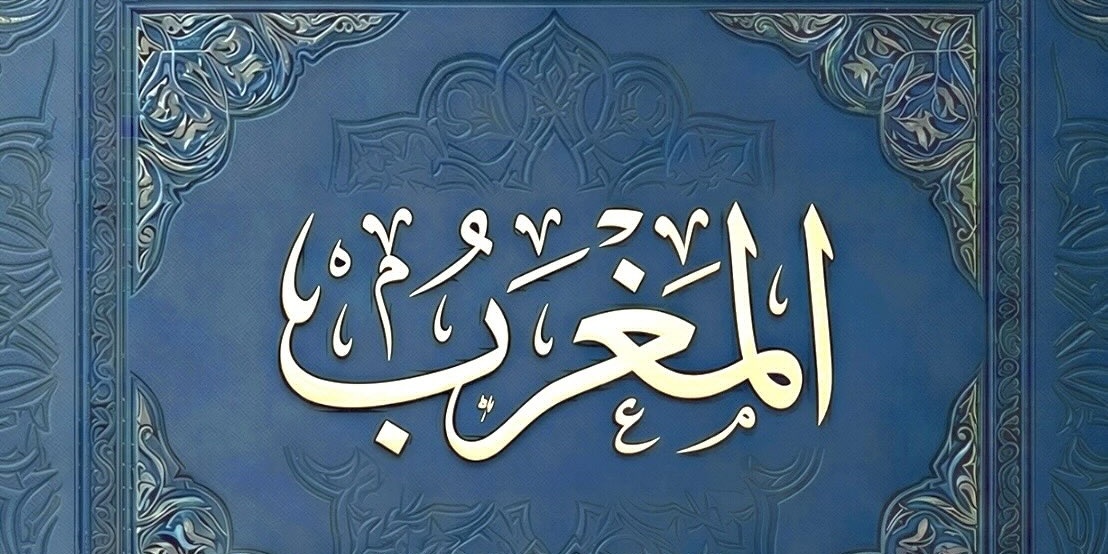
En la imagen
Al-Maghrib in Arabic, Morocco’s official name

EXECUTIVE SUMMARY
Morocco occupies a singular position in the geopolitical landscape of the early twenty-first century. Situated at the intersection of the Atlantic, the Mediterranean, Africa, and Europe, the kingdom consistently exercises influence disproportionate to its material weight. With roughly 37 million inhabitants and a middle-income economy, Rabat has leveraged monarchical continuity, strategic geography, and adroit diplomacy to position itself as an indispensable partner for competing global powers. This report traces the interlocking dynamics that define Moroccan statecraft across four concentric layers: domestic foundations, territorial disputes and EU relations, the Maghreb and Middle East, and continental ambitions.
Domestically, Mohammed VI combines religious, executive, legislative, and military authority within a hybrid regime that has absorbed both the 2011 Arab Spring and the more recent GenZ 212 protests through selective concession and narrative management. This institutional resilience enables Morocco's economic repositioning: a 7-billion-dollar port investment programme centred on Tanger Med, the Nigeria-Morocco gas pipeline, renewable energy targets of 52% installed capacity by 2030, and continental-scale rail expansion collectively underpin its bid to serve as a logistics and clean-energy hub between Africa and Europe. An infrastructure investment gap exceeding 37 billion dollars, uncertain hydrogen markets, and modest Mediterranean traffic growth nonetheless condition the pace of this transformation.
The Western Sahara conflict remains the gravitational centre of Moroccan foreign policy. UN Security Council Resolution 2797 (October 2025), endorsing genuine autonomy under Moroccan sovereignty as the most realistic settlement basis, represents the most significant diplomatic advance since the 1975 Green March, effectively removing the independence referendum from the active horizon. Morocco's relationship with Spain and the EU exemplifies its broader approach of calculated coercion within structural interdependence: the instrumentalization of migration flows and customs restrictions extracted Spain's formal endorsement of the autonomy plan in 2022, while Brussels has progressively shifted toward pragmatism—aligning with Resolution 2797 in January 2026—even as the Court of Justice restricts trade agreements that incorporate Western Saharan resources without Sahrawi consent.
Regionally, the Morocco–Algeria rivalry constitutes the primary driver of Maghrebi instability. The 2021 diplomatic rupture, a sustained arms race—Algeria's defence budget reaching 25 billion dollars in 2025—and divergent alignments (Morocco toward the United States and Israel; Algeria toward Russia and China) have paralyzed regional integration. The most probable 2026–2031 trajectory combines high international recognition of Morocco's position with a maintained diplomatic rupture. Mauritania functions as a conditional but manageable partner, granting Morocco controlled access to the Sahel without full alignment. Morocco's normalization with Israel under the 2020 Abraham Accords has deepened military and intelligence cooperation, formalized in a joint work plan in January 2026, though the role of broader Arab normalization broker is increasingly assumed by the UAE.
At the continental level, Morocco's 2017 return to the African Union—combined with its position as the second-largest African investor on the continent, the OCP Group's fertilizer operations, and the Atlantic Initiative—reinforces both its economic footprint and its Western Sahara objectives. Sahelian instability poses structural but manageable spillover risks, addressed through proactive counterterrorism, religious diplomacy, and development programming. The portrait that emerges is of a kingdom that has maximized its institutional and geographic resources to exercise outsized influence, yet whose continental-scale ambitions—hub status, territorial consolidation, trade nexus—remain contingent on sustained financing, demand-side alignment, and the durability of Western diplomatic support. Morocco's trajectory is therefore one of managed ascent, shaped as much by the real constraints upon its ambitions as by the ambitions themselves.