En la imagen
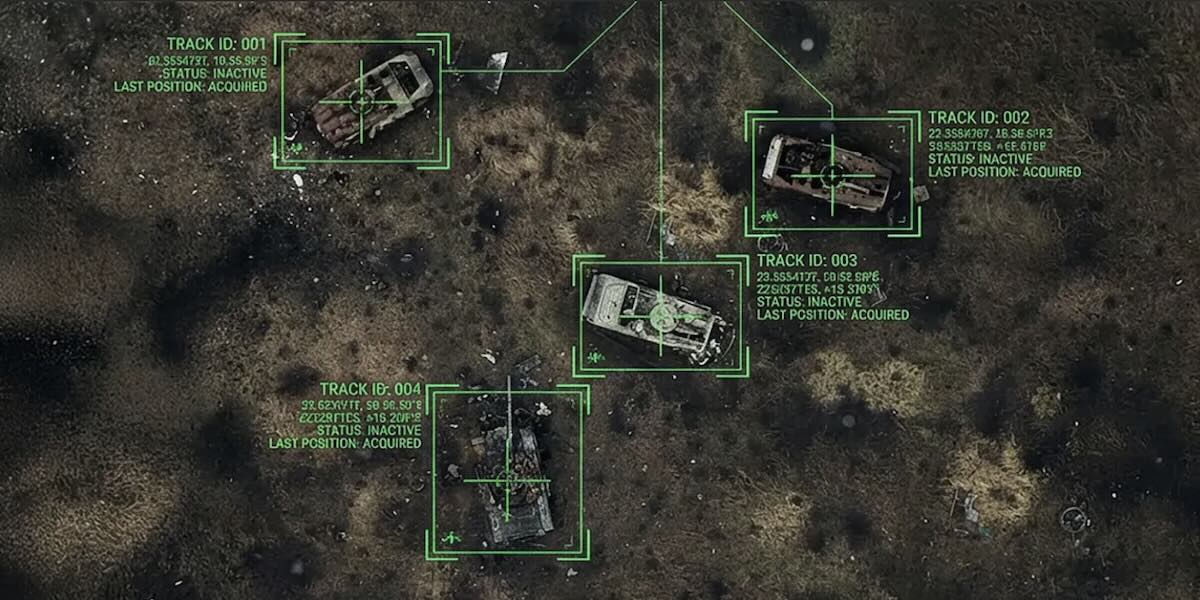
Russian tanks targeted by Ukrainian troops [MoD of Ukraine]
In 2022 the Russian military invaded Ukraine in what many though would be a quick victory, with Russian forces waging a lightning war and ending it in days or weeks. However, a battle of attrition quickly took hold and contrary to what was expected, the tank, considered to be the hegemon of the modern battlefield was outmatched by new, smaller, and cheaper drones. One year later, on October 7, 2023, the Palestinian terrorist group Hamas launched a devastating attack upon Israel. The Israeli Defense Forces then began a grueling campaign in the Gaza Strip to flush out the terrorist group. In the brutal urban combat that followed, the ‘Merkava’ tanks of the IDF took loses to Hamas drones as similar tactics to those employed by Ukraine against Russian tanks were used.
These events show that the tank, and other conventional weapons, are facing new challenges on the modern battlefield brought about by cheaper weapon systems. These challenges require new approaches and countermeasures to ensure modern militaries can adapt to the ever-changing battlefield and not only survive but defeat the enemy. The following article seeks to analyze the use of drones against tanks in the Ukraine War and Gaza and what countermeasures have been taken to counter the problem by the Ukrainian, Russian, and Israeli militaries. We will also analyze what measures NATO members and other countries have implemented to counter drones or an in the process of developing.
Background: Basics of armored warfare
To understand the current situation, we must understand the tank and its role on the modern battlefield. Most tanks, such as those of the US, Europe, Russia, and Israel were created with the intent of being used in combat against other tanks or as a support weapon for infantry. These views came to prominence after the lessons learned from WW2, where tanks, such as the M4 ‘Sherman’ were used to act as fire support for infantry, rather than engaging other tanks. The mission of engaging tanks was left to specialized vehicles known as Tank Destroyers. During WW2, said approach was discovered to be greatly flawed as tanks faced the threat of landmines, anti-tank guns, man portable anti-tank systems, and enemy tanks. All this meant that tanks could not operate alone without infantry and required them to be prepared to challenge the new threats. Another threat that rose for tanks was aircraft, which could target armored vehicles in the open with few opposition if anti-aircraft weapons were unavailable, as the German experience during and after the Normandy campaign showed, as their ‘Panzer’ IV and ‘Tigers’ fell victim to American P-47 ‘Thunderbolts’ and British Hawker ‘Typhoons’.
The only defenses against the threat posed by these anti-tank weapons were infantry accompanying the tank that could escort the vehicle and neutralize threats where the vehicle could not reach. The only defense the tank itself could use was improvised armor. These were improvised measures taken by crews in the field, placing wooden planks, tank track, cement, sandbags, metal planks and anything they could find to add more armor to the tanks. The efficacy of these measures was a point of controversy to the point that most forms of improvised armor on ‘Shermans’ were prohibited by General George S. Patton, claiming it increased the weight of the tanks without offering protection, as well as affecting mobility.
These lessons influenced tank designs during the Cold War which were developed to be able to engage both as fire support to infantry in combined arms actions and to take on other tanks. During this period, as seen in the Yom Kippur War, the greatest threat to tanks were Anti-Tank Guided Missiles (ATGM). The ATGM itself was the evolution of the anti-tank missiles developed during WW2 such as the ‘M1 Bazooka’ or the German ‘Panzerfaust’. ATGMs became more common in the 1970s, became more portable, and advanced with the introduction of better guidance systems such as the Tube-launched, Optically tracked, Wire guided missile or TOW.
The considerable losses suffered by Israel in Yom Kippur led to the creation of Chobham armor by the British and Americans to counter this new weapon. Chobham, better known as ‘composite’ armor is a combination of several layer plates of different materials, including metals, ceramic, and plastic. This was the main focus in the development of Main Battle Tanks (MBTs) from the 1970s up until today. Another advance came in the form of Reactive Armor. Developed first by the Soviets, and gradually adopted by Western Militaries, the idea was to place a series of brick shaped explosive charges on the tanks with the objective of detonating the projectiles before they hit the tank, by deflecting the shrapnel and molten metal away from the tank, protecting the crew.
Through the Cold War, one of the mayor threats strategists believed the tank would face in the battlefronts was the threat of aircraft, as armored vehicles tend to have weaker armor in the turret and upper area. As mentioned before, a well-placed shot by an anti-tank rocket, missile or even cannon rounds sufficiently strong to penetrate armor can neutralize tanks. It was anticipated that in full scale war between NATO and the Warsaw Pact, massive tank battles would take place, with ground attack aircraft such as the Fairchild Republic A-10 ‘Thunderbolt’ would smash tanks and ground forces with a combination of missiles, rockets, bombs, and cannon fire. This view was validated during the 1990-1991 Gulf War and the 2003 Iraq War, when A-10s conducted airstrikes Iraqi armored units.
In the 2000s, especially during the 2003 US Invasion of Iraq, Operation ‘Iraqi Freedom’, two new threats against tanks were discovered by the Coalition: the Improvised Explosive Device (IED) and the car bomb, formally known as Vehicle-Borne Improvised Device (VBIED). The IED and VBIED caused severe problems to Coalition forces in Iraq during the invasion and subsequent insurgency, damaging several ‘Abrams’ tanks. The most effective way to deal dealt with IEDs was by the use of Explosive Ordnance Disposal (EOD) personnel to disarm bombs or preemptively detonate them before the Coalition forces approached. In the case of the VBIED, the only defense was to destroy them before they reached the tank by gunfire.
Ukraine and Gaza: New threat
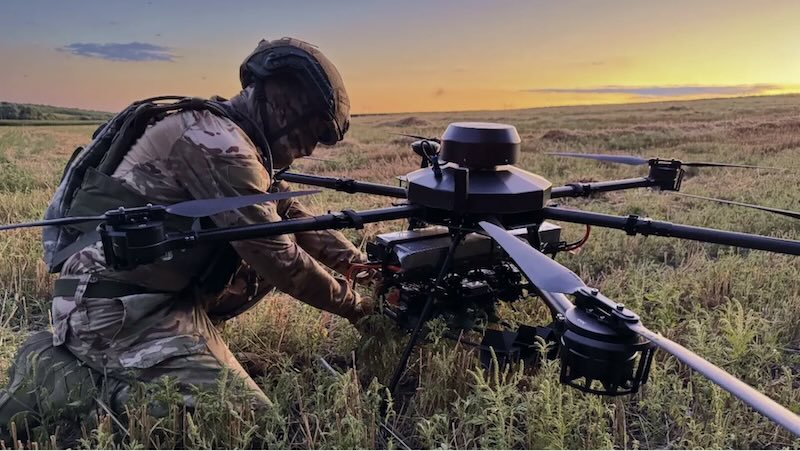
In Ukraine and Gaza, the tank must deal with the conventional threats tanks had been designed to face, in addition to the rise of small commercial drones reconfigured to drop mortar shells over enemy positions or reconfigured into suicide drones. In Ukraine, the First Person View (FPV) drones have been used extensively as kamikaze attackers against infantry, vehicles, and tanks. These vehicles are controlled using an onboard camera, which allows them to operate further behind enemy lines, conducting precision strikes on unsuspecting enemies.
There are few defenses to the drone for troops in the field. With an average speed of 37 mph, and thanks to their reduced size, FPV drones are very hard to detect by advanced systems, with the Russian military losing to them considerable numbers of troops and vehicles. The whole world has been surprised by the ability of small, commercial drones to take down some of the most powerful tanks in the world, such as the ‘Merkava’ in Israel or US-supplied ‘Abrams’ in Ukraine.
In Gaza, Hamas has employed similar tactics, using small, commercial drones to drop grenades on the upper part of IDF ‘Merkava’ tanks, neutralizing several units. Furthermore, suicide drones launched by Hamas caused damage to sensitive targets such as observation posts near Gaza on the October 7 attack. Houthi rebels have used suicide drones—most of them of the Iranian ‘Shaheed’ model—to strike deep into Israel in large numbers, with a handful of them breaking through the ‘Iron Dome’ and Israeli Air Force fighters trying to shoot them down.
The rise of the drone has had severe implications for tanks in Ukraine, as drones have become as big of a threat as the man-portable ‘Javelin’ anti-tank missile that inflicted heavy losses in the early years of the war. Up until 2022, the only drones that had posed threats to tanks were the larger military ones equipped with missiles and bombs to neutralize armored vehicles, like the American MQ9 ‘Reaper’, already tested in US operations in Iraq and Afghanistan, and the Turkish ‘Bayraktar’ TB2. In the opening stages of the invasion of Ukraine, ‘Bayraktar’ drones helped Ukrainian forces halt the Russian advance.
The introduction of FPV drones has changed the situation. FPV drones are cheaper and less complex to operate than larger UAVs, but no less effective. In Israel, FPV drones were, as mentioned before, efficient in targeting IDF forces such as guard towers, or in hitting tanks on the upper area, their most vulnerable spot. In the way to attack tanks, FPVs follow in the wake of combat aircraft, as seen by during operations in the Middle East. In this, FPV drones are no different to aircraft; however, their size and speed make it harder for the crews of tanks to spot them and get out. Furthermore, drones make less noise, making them stealthier than fighter jets, leaving crews unable to deal with them.
As of 2025, the drone has overtaken the tank as the primary actor in combat in Ukraine, with most of the casualties suffered by both sides in the war being the result of drones.