
In the image
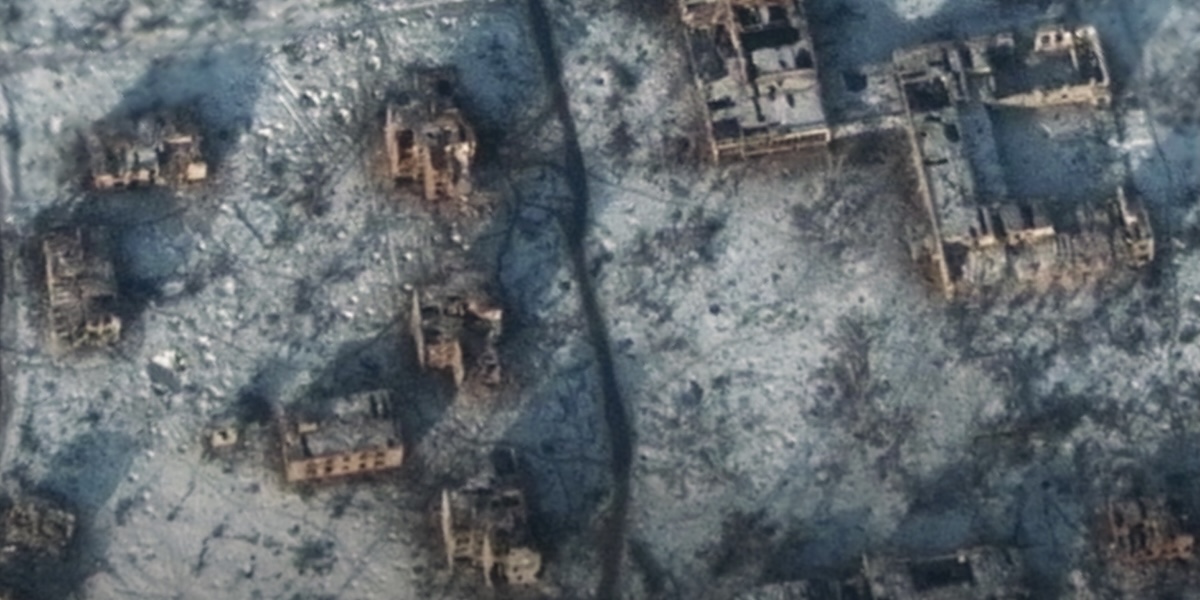
A destroyed landscape in Ukraine [Cesium]
In February 2026, the war in Ukraine completed four years of large-scale combat. Ever since the Russian invasion in 2022, supported allegations have indicated that Russian forces have employed chemical compounds, especially in the form of Riot Control Agents (RCA), against Ukrainian forces. The use of such agents as a method of warfare has been banned under the Chemical Weapons Convention (CWC), to which Russia is a state party. Russia has consistently denied Ukrainian claims on the use of RCAs and industrial chemicals in the battlefield; however, these claims are difficult to dispute.
Riot Control Agents are chemical compounds that produce sensory irritation or disabling physical effects that disappear shortly after exposure ends. These agents mainly affect the eyes, mouth, throat, lungs and skin producing effects such as burning sensations, excessive coughing, shortness of breath, teary eyes and blurred vision. While intended to be non-lethal, exposure to high concentrations of these can produce severe injuries, including blindness, respiratory failure, chemical burns to the throat and lungs, or, in very extreme cases, death. RCAs are formed by various chemical compounds, the most common are typically referred to as tear gas or pepper spray.
RCAs can be regarded as ‘dual-use’ items, meaning that they can be used for peaceful (civilian and commercial) purposes, but also as weapons—or means of delivery–for military purposes. The concept of dual use creates complex ethical and security dilemmas: while both state and non-state actors could easily access such dual-use items for chemical weapons purposes, a toxic or precursor chemical could also be used, for instance, to produce pesticides that protect crops and ensure food security. Despite existing dual-use export controls, there are still numerous challenges to ensure with certainty that dual-use items will be used for peaceful intended purposes.
The CWC follows a General Purpose Criterion, according to which a toxic or precursor chemical is only defined as a chemical weapon if it has been developed or used for purposes prohibited by the Convention; it details that any chemical with an intended purpose of a weapon is considered a chemical weapon, regardless of whether it is specifically prohibited in the convention or its annexes. The CWC specifically bans the use of RCAs as a “method of warfare” (Art. 1.5) but permits their use for “law enforcement and domestic riot control purposes” (Art. 2.9(d)).
The main utility of RCAs is as policing instruments by law enforcement to control crowds or to restrain violent individuals. Pepper spray is also commonly used by individuals for protection and self-defense against threats. However, many have used these agents in military conflicts as weapons, to destabilize opposing forces and incapacitate combatants, something which is prohibited under the CWC.
The use of RCAs in the war in Ukraine
Ukraine’s first claim against Russia for the use of RCAs was in September 2022 and, since then, evidence has kept on resurfacing. In May 2023, a Russian battalion commander, Vladislav Vodolazsky, claimed to have dropped grenades containing chemical agents on Ukrainian soldiers. Ukraine has requested the assistance of the OPCW to investigate Russia’s use of chemical weapons. The OPCW has released three reports, one in 2024 and two in 2025 (February and June), on the technical assistance visit to Ukraine, which have confirmed the presence of RCAs, mainly the so-known as CS gas, in grenades, and soil and vegetation samples collected from confrontation lines.
The United States and some European countries have made similar findings. In June 2024, the United States embassy in Poland released a statement indicating its imposition of sanctions against several Russian government entities and companies after determining their violation of the CWC due to the usage of chloropicrin, a choking agent commonly used during World War I, and RCAs as methods of warfare against Ukrainian troops. Most recently in June 2025, the Netherlands and Germany reported on the increased use of banned chemicals in Ukraine by Russian forces, calling for more sanctions on Russia and continued military support to Ukraine. Dutch and German intelligences found that use of such methods of warfare had become “standardized and commonplace” in Ukraine.
According to these findings and statements by both Ukrainian and Russian soldiers, RCAs are mainly being used to “smoke out” soldiers from trenches and other defensive positions, so they are essentially forced out into the line of fire and attacked. The chemicals are usually contained in grenades thrown at Ukrainian fortified positions Although soldiers receive training to counter chemical attacks, they lack adequate and sufficient protective equipment against toxic chemicals. Beyond physical effects, the use of these agents also has a psychological burden on troops, as the threat of chemical exposure creates a stressful environment that mentally destabilizes soldiers.
A complex environment to confront the threat posed by RCAs
The availability of weapon precursor chemicals, especially those of dual-use nature, implies a need for constant and sophisticated vigilance to prevent the acquisition of these products for wrongful purposes. Due to globalization and the growth of international trade, despite its very positive contributions, it becomes more and more difficult to keep these products from falling into the wrong hands, whether it be non-state or state actors. Consequently, the international community emphasizes the importance of states taking harmonized monitoring and control measures to prevent the misuse of these chemicals and avoid tragic consequences. The framework for the governance of international trade in chemicals is composed of various international conventions and arrangements, which provide different mechanisms and regulations that states follow to ensure the supervision of cross-border movement of hazardous chemicals.
Export controls is one of the instruments for states to restrict and prevent the trafficking of precursors for chemical weapons. This is usually exercised through the granting of licenses emitted by the competent authorities of the exporting state and the supervision of National Authorities in customs controls. However, national mechanisms are not fully intended to restrict trade of products in the chemical sector, as many of them have civil and legitimate uses in multiple industries such as agriculture, healthcare, manufacturing and energy. Instead, these mechanisms are intended to prevent goods from being used for non-desired purposes, such as the production or transfer of weapons. The dual-use characteristic of the necessary products for the development of chemical weapons makes it an arduous job to identify their purposes, so they can easily evade customs control. Although the CWC also has regulations on the transfer and trade of chemical weapons precursors listed in their three schedules, the access to these products becomes easily possible when they have other uses.
RCAs present a particular case, since they are not listed in the CWC’s schedules, they do not face the same strict transfer restrictions as highly toxic agents, however their trade is still controlled. Under Article 3.1.e. of the CWC, states parties are required to submit an initial declaration of all chemicals kept for riot control purposes. This provision is limited as it does not require them to provide any details of quantity, means of delivery, or who is holding RCA stockpiles. Without such information, transparency and reporting is minimal. Nevertheless, most countries do require specific export licenses for the trade of riot control agents, for example the EU under Regulation 2019/125 strictly controls the exportation of those goods that could be used for torture or other cruel treatment, including RCAs and other chemical weapons precursors.
The international legal framework against Russian use of chemical weapons
Under Article VII of the CWC, all 193 States Parties are required to implement national measures to ensure the treaty’s provisions are upheld within their jurisdictions. Similarly, United Nations Security Council (UNSC) Resolution 1540 (2004) mandates that all UN Member States adopt and enforce effective laws and measures to prevent non-State actors from acquiring, developing, or trafficking nuclear, chemical, and biological weapons, and their delivery systems. Hence, these measures are designed to translate international obligations into domestic law, targeting both government and private chemical activities. National implementation is essential, since the CWC and other measures are not self-executing, which means that they rely almost completely on states parties: the ‘success’ depends to a large extent on how each state translates these regulations into their national law.
On 23rd October 2025, the European Union adopted its 19th package of sanctions against Russia, which includes specific restrictions on chemicals among other dual-use goods. In light of the previously mentioned allegations and evidence, the EU extended export restrictions to include new advanced technology and dual-use items that could contribute to the Russian military-industrial complex. Some examples of such restrictionsinclude the prohibition to import or transfer any acyclic hydrocarbons originating in Russia; specific chemicals used in the preparation of fuels and propellants for military systems; high-technology metals and oxides; and finished products such as rubber articles, tubes and new tires, which contain industrial chemicals under strict surveillance.
Even though EU sanctions are isolating the Russian economy from the European market, and despite a perceived reduction in Russia’s revenue, the effectiveness of EU economic measures might also be undermined by Russia’s ability to find alternative suppliers in Asia and indirect transit routes via third countries. Noteworthy is the unusual increase in exports from the EU to Turkey, Kazakhstan, Armenia and the United Arab Emirates of goods that end up in Russia. And there has been much talk about Russia’s shadow fleet, and Europe’s increasing efforts to frustrate Russian circumvention of sanctions.
Future prospects: the continuous strengthening of sanctions in the EU
As the war enters its 5th year, response to Russia’s conduct in Ukraine remains politically constrained, even as evidence of chemical warfare allegations and other violations continues to develop. The OPCW’s technical assistance reports and findings have strengthened claims for treating the use of RCAs as a breach of the CWC. Yet, EU negotiations for the proposed 20th package of sanctions against Russia were vetoed by Hungary, blocking both a €90 billion emergency loan for Kyiv and the proposed sanction package. As of the March 2026 European Council summit, 25 of its 27 members have reaffirmed the EUs continued support for Ukraine, and their commitment to swiftly adopting the 20th sanction package, but the deadlock is yet to be formally resolved. Holding Russia accountable demands not only the legal framework, but also a sustained political will that has been difficult to maintain.