
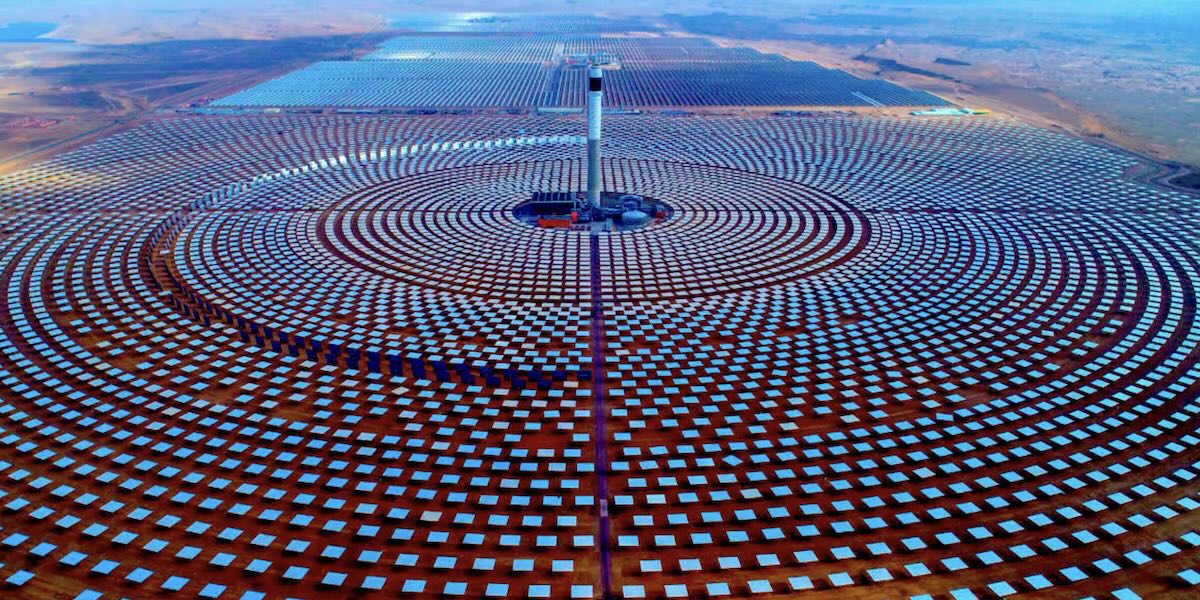
En la imagen
Ouarzazate Noor solar power plants I, II, III

PRESENTATION
This report asks a simple question with far‑reaching implications: Will Morocco, over the next decade, actually become a worthwhile place for a foreign company to build large‑scale solar and battery projects? It is written for a European renewable energy developer that is weighing an entry into the country and needs forward‑looking political risk analysis specifically focused on the solar and storage value chain rather than a broad country profile.
The focus is deliberately narrow. The report examines how Morocco’s energy and climate agenda, power‑sector reforms, and institutional practices on the ground shape the risk–return balance for solar and storage investments. Particular attention is paid to the “friction points” that decide whether projects move or stall: permitting and bureaucracy, grid capacity and connection, land access and local reaction, the availability and cost of funding, and Morocco’s attempt to position itself as an energy bridge between Africa and Europe.
Analytically, the report combines country and sector analysis with prospective tools used in political risk assessment. It employs a SWOT analysis and develops three sets of scenarios for the evolution of the Moroccan solar and storage market between now and 2035, identifying the outcome that appears most plausible and the conditions under which it could shift. The goal is not to recommend policies, but to give decision‑makers clear, estimative judgements on the main opportunities and risks they would assume by committing capital to Morocco’s renewable energy sector.