
In the image
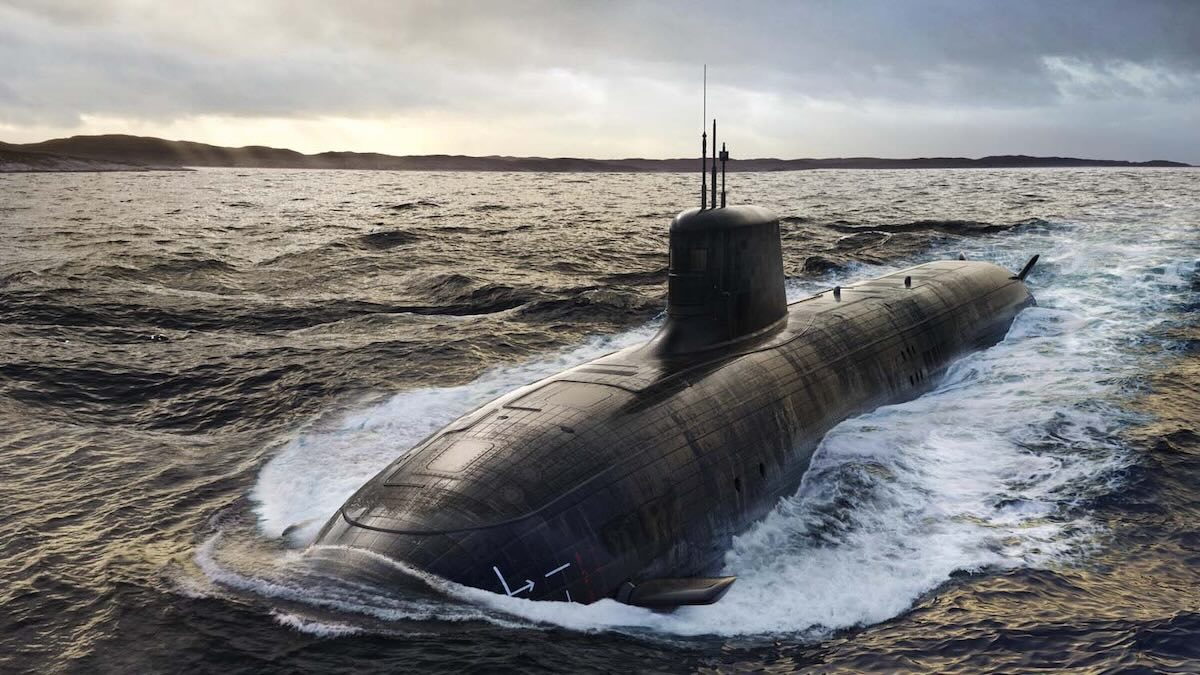
Artist rendering of possible design for SSN-AUKUS submarines [BAE Systems]
When the United States, the United Kingdom, and Australia signed the AUKUS agreement, they claimed to be moving towards a Free and Open Indo-Pacific. However, almost five years later, the pact has become a hub for global controversy. The introduction of nuclear capabilities for Australia not only threatened to dismantle decades of nuclear non-proliferation in the region but also settled a strategic shift for the United States foreign policy. Today the existence and performance of the treaty is key to understanding the Indo-Pacific as a centre of modern geopolitics.
AUKUS was built on two primary pillars. ‘Pillar I: Enhanced Trilateral Strategic Partnership’ sets the foundation for a multi-decade project to provide Australia with its first fleet of conventionally armed, nuclear-powered submarines (SSN) by 2040. The American Virginia-class submarines “do not have the same limitations that face conventional submarines on weapons storage, speed and endurance. They can stay completely submerged for many months, limiting (...) detection by adversaries,” differently to SSK, the traditional diesel-powered submarines, who have limited endurance and technologies. Furthermore, AUKUS seeks not only the sale of SSN but also sets a precedent for their domestic production. While the government of Australia reiterates its efforts and leadership in nuclear non-proliferation, refusing to acquire attack class submarines, the new frictions and demands of the Indo-Pacific theatre required a much stronger response by the Australian government. AUKUS is the exact response to the stress between Beijing and Washington.
‘Pillar 2: The Technical Cooperation Program’ focuses on the joint development of advanced technologies. AUKUS aimed to set the foundation for multilateral cooperation on the development and renewal of top tier undersea capabilities, such as quantum science, AI, advanced cyber, hypersonic and electronic warfare. Pillar 2 also seeks an expansion of the AUKUS Treaty to other partners in the region such as Japan or South Korea to jointly counter the Chinese lead in maritime dual-use technologies. By merging their defense industrial bases and sharing some of their most sensitive military capabilities, the three nations aim to create a unified deterrent that is more technologically advanced and strategically capable. While opening a door for other aligned countries in the region to join the deterrence effort.
Moving beyond the legal and treaty analysis of the agreement’s text, the fifth anniversary of the treaty is a convenient occasion to examine the execution challenges and geopolitical externalities of AUKUS, focusing on the tension between proposed strategic goals and realized political costs. The strategic benefits of AUKUS for integrated deterrence are continually challenged by the severe political and industrial trade-offs along with escalating geopolitical friction, making the pact's long-term viability a test of trilateral nature.
The Geopolitical test: Balancing deterrence with diplomatic friction
The Chinese government has been fierce in its response against AUKUS since its announcement. China has carried out a diplomatic campaign discrediting the pact overall, but with a special focus on Pillar 1 and the diversification of SSNs ownership in the region. Classifying Australia as a ‘pawn’ of the United States engaged in Cold War-style confrontation. Through its media, the Chinese government argues that AUKUS and US deployment in the Pacific is a clear intent for open confrontation with China along the Cocos Islands while militarizing Australia from “southern anchor to a southern spear.”
The Chinese response has also relied on the legal loophole in the NPT used by the US, the UK and Australia, effectively weaponizing the debate on nuclear non-proliferation. The obligations bound on the NPT and their lack of compliance by the AUKUS parties have also been the centre of the Chinese critique. The NPT distinguishes between peaceful and proscribed uses and purposes of nuclear material. It then allows the “use [of] nuclear material in a non-proscribed (that is, non-explosive) military activity, and it is not obligatory to accept safeguards on nuclear material in such an activity.” AUKUS parties have argued that the transfer of SSN strictly adheres to NPT outlines and is in compliance with IAEA regulations and inspections, respecting international law.
Yet the transfer of SSN is scheduled to begin in 2032, as a challenge to uphold or disregard the principles of non-proliferation. Moreover, the AUKUS agreement sets a clear precedent for the eventual nuclearization of the Indo-Pacific and the globe. The treaty in itself is open for enlargement of parties, and its vindication also opens the door for the recurrent use of Article 14 loophole creating a friction with nuclear non-proliferation and the crisis of the rules based global order.
Indo-Pacific responses to AUKUS
There has been a variety of responses to AUKUS. On one hand, countries who regard the pact as stabilized welcome AUKUS as a necessary counterbalance to China’s growing military presence and a signal of continued US commitment to the region. Japan and South Korea took advantage of Pillar II and began formal consultations to actively cooperate and benefit from the shared maritime technology development. Similarly, the Philippines views AUKUS as a mechanism to maintain a rules-based order in the South China Sea and prevent hegemony in the region. Vietnam, avoids antagonizing China, but expressed tacit support for the balance in hard power that AUKUS brings to the Indo-Pacific.
A second group of countries are skeptical and concerned of the effects that AUKUS may have, seeking regional neutrality and adhering to existing diplomatic frameworks like ASEAN. Indonesia and Malaysia have expressed concern for the new arms race that AUKUS may trigger in the region and instability it may bring. There is concern too for the routes for the new Australian nuclear submarines which may include the Lombok and Sunda Straits (Indonesia).
Lastly, a third group of Indo-Pacific countries adopt a pragmatic or neutral stance in regards to the new nuclear deal. Singapore, while trusting Australian commitment to non-proliferation, worries on the US-China tensions that it might create. Yet it facilitates military presence of AUKUS countries in the region to avoid power vacuums. India has opted for a neutral stance and prefers to shift the focus to broader regional cooperation through QUAD and frameworks that allow a higher participation from the subcontinent.
AUKUS’ shortcomings and challenges
While AUKUS was initially framed as a milestone that would push for a Free and Open Indo Pacific, since its launch it has faced substantial shortcomings and challenges regarding industrial and financial strain, the balance between sovereignty and geopolitical objectives and its latent expansion.
The sales and transfer of SSN have found themselves with gaps in the pact’s strategic ambition and the industrial capacity required to build the hardware. Currently the US produces roughly 1.2 Virginia-class submarines per year when a rate of 2.33 is needed to satisfy both US domestic requirements and AUKUS obligations. On the side of the UK the attack submarine industry has suffered “decades of underinvestment, limited focus and a shortage of experienced personnel.” The British are faced with challenges to update their underwater technology in order to comply with national security requirements while simultaneously adhering to AUKUS promises. For Australia the project is estimated to cost around 368 billion AUD (260 billion USD), forcing a doubling of defence spending with a 70% reduction in other military programs with high uncertainty for due delivery and probably social costs for the cuts in other programmes.
Additionally, the perfect illusion of cooperation that AUKUS tried to portray between Australia and its partners, erodes when it comes to the balance between sovereignty and geopolitical objectives. For former Australian Foreign Affairs Minister Bob Carr AUKUS volatile promises “involve(s) the total loss of any sovereign submarine capacity and, more than that, a colossal surrender of Australian sovereignty in general.” Opponents to AUKUS argue that the pact represents the loss of individual alignment for Australia on security matters relying heavily and solely on the United States.
Lastly, Pillar 2 foresees the expansion of the pact to other partner countries in the region like Japan, South Korea or New Zealand, yet its future and specifics and costs still remain undetermined for all parties. An expansion of the deal will add on to the tension already present in the Indo-Pacific and raise more questions on the state's alignment to nuclear non-proliferation.
Five years into AUKUS, the Indo-Pacific sits at a critical pivot where its plan is meeting the friction of industrial and political reality. While the pact has successfully evolved into a trilateral military cooperation for its partners, the region remains sharply divided between those who view it as a stabilizer and those who fear it as an accelerant for a new Cold War.