
En la imagen
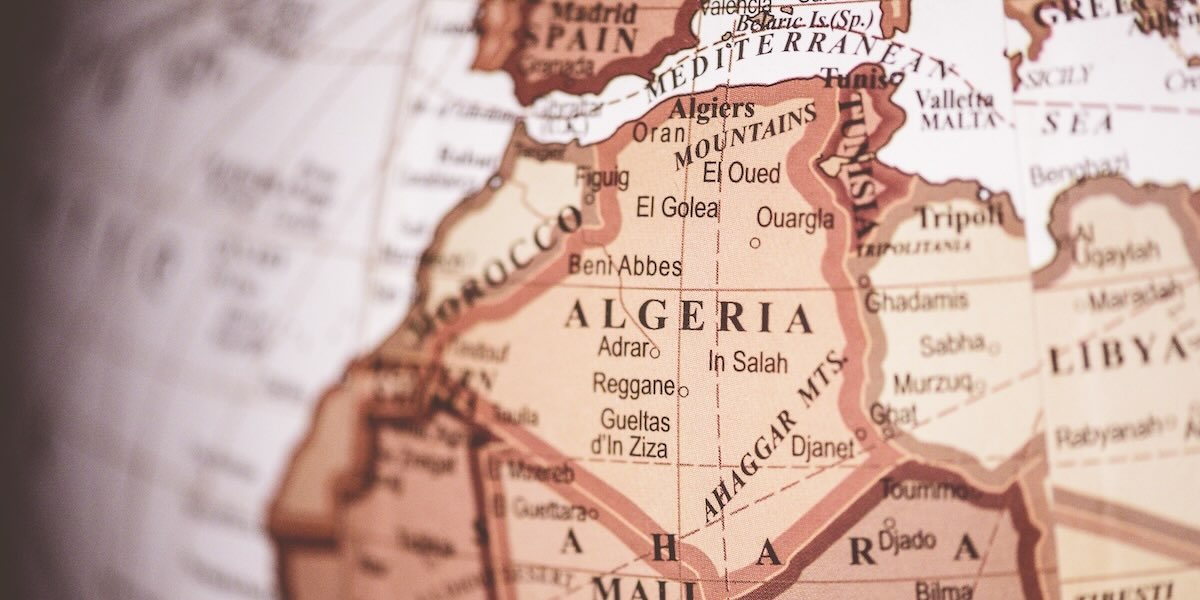
Map of the Maghreb region [freepik]
Despite repeated efforts at regional cooperation, attempts to construct a stable security architecture in the Maghreb region have remained elusive. The Arab Maghreb Union continues to fall behind other African economic blocs, yet, given its natural resources, geopolitically strategic position, and large population, the region represents a ‘could‑have‑been’ regional power.
Regional unification of the Maghreb nations would create a market of almost 100 million people with a joint GDP exceeding $360 billion, comparable to South Africa, the UAE, or Norway, as the IMF suggested in 2019. Some political scientists, however, argue that the continuing dispute between Algeria and Morocco has turned the Arab Maghreb Union into “a total failure”, severely constraining the region’s development and international position. The region, although rich in natural resources and possessing robust defence capabilities, exhibits symptoms of structural pathology: incomplete state formation rooted in a complex colonial legacy of arbitrary borders and clashing understandings of independence. This article will analyse how the countries’ historical legacies continue to stand in the way of security, cooperation, and regional integration in the Maghreb, with particular attention to the enduring rivalry between Algeria and Morocco.
Colonial heritage
While analysing the main obstacles that hinder the way towards regional cooperation, the varied effects of French colonial rule in the region must be considered. Though it could be perceived that the neighbouring nations’ common history of struggle for independence would unite them, reality has proved otherwise. Under French colonialism, the countries faced varying French treatment, resulting in notably different paths to independence and post-colonial legacies. Consequently, the neighbouring states have since been subject to territorial disputes and enduring deadlock. In comparing Algeria with Morocco or Tunisia, this variance in the manifestation of French colonialism is seen most clearly, with the colonial impact in Algeria being much more dramatic.
Algeria was under French rule for the longest period of time, and was also the only country out of the three to be considered part of France, called Algerie Français, composed of the three departments of Alger, Oran, and Constantine. Morocco and Tunisia, in contrast, enjoyed a greater degree of autonomy as colonies and protectorates. Tunisians maintained their own government structure and cultural identity, while Moroccans managed to preserve the traditional ‘makhzen’ system which functioned in cooperation with the French colonial government.
Here, the consequences of French strategic divergence are exemplified, as Morocco managed to retain its culture with little upheaval and with maintained loyalty to the monarchy in its campaign for independence, while Algeria went through a long and violent anti-colonial struggle to gain freedom. The instability in the country led to authoritarian governance and economic nationalisation, which has been largely associated with a lack of productivity. This low productivity created uneven development and complicated attempts to align economic and policy frameworks in the Maghreb region, which, overall, undermined regional integration.
Despite early attempts of regional cooperation against French rule, hopes for a united front were quickly abandoned as the French government granted only Morocco and Tunisia independence in 1952, maintaining control over Algeria. This division fostered a sentiment of mistrust among the neighbours and set the stage for future rivalry. Ultimately, the administrative borders imposed by France led to Morocco's territorial claims against Algeria, starting a self-perpetuating cycle of hostilities over an essentially inviolable issue, culminating in the Sand War of 1963.
While for Moroccans the French established borders are a continuous reminder of “unfinished decolonisationprocess”, Algerians view them as a reminder of the sacrifice and martyrdom displayed in their struggle for independence. Over the years, these contrasting points of view have acted as a catalyst for conflict, whether it be the unresolved border disagreement, opposing nationalist sentiments, or the Western Sahara dispute—generally Algerian-Moroccan hostility has notably increased. Additionally, the varying colonial treatment has influenced the countries’ political structures. Following their paths to independence, Algeria emerged as a socialist republic while Morocco maintained its monarchy and aligned itself with Western interests—further complicating regional.
Western Sahara
The Western Sahara dispute further solidifies this rivalry: Morocco claims the territory as an integral part of its kingdom, while Algeria supports Sahrawi self‑determination under international law. These contrasting positions make compromise difficult and have encouraged both states to prioritise extra‑regional partners, each trading more with the EU rather than with each other. The closed border, frozen trade and persistent rivalry are thus among the most tangible contemporary effects of this unresolved colonial legacy. Consequences of this rivalry has even reached the point of sacrificing economic gains, exemplified in 2021 when Algeria halted gas exports to Spain through Morocco. This further illustrates how political tension gets in the way of regional integration.
Given these ongoing disputes, the Maghreb would significantly benefit from collective security arrangements that could free resources for development and welfare. Algerian–Moroccan rivalry is locked in a security dilemma, for, as the well‑regarded political thinker John Mearsheimer explains, states in an anarchic system tend to seek relative gains, believing that “the greater the military advantage they hold over the other state, the more secure [they are]”. Any improvement in one side’s capabilities is therefore read as a threat by the other, mitigating any incentive for cooperation. Algeria and Morocco thus participate in a self–perpetuating arms race that reflects a broader pattern, where post-colonial regimes seek internal order through exaggerated external threats. According to recent data, Algeria spent around $18.3 billion on defence in 2024 – roughly 7.2% of GDP, while Morocco’s defence expenditure reached about $13.4 billion, or 4.2% of GDP; together, they accounted for approximately 87% of total military spending in North Africa that year. This military‑centred agenda diverts resources from education, health, and infrastructure, which constrains socio‑economic development and weakens the very state capacities that would be required for the Maghreb region to emerge as a coherent regional power.
IMF illustrative calculations suggest that increased trade openness, further participation in global value chains, export diversification and improved product quality could raise income levels in the Maghreb emerging markets by around 5–10% in five to ten years. These foregone gains show how Algerian–Moroccan rivalry and the resulting institutional fragmentation keep the region in a situation that remains disturbingly similar to the colonial era, in which external alignments and security concerns trump regional cooperation. At the societal level, however, populations across the Maghreb share closely related languages, cuisines, and cultural practices, and dense cross‑border ties, indicating that it is state policies—rather than deep social divisions—that undercut regional integration.
While Morocco has continuously highlighted that the matter of autonomy of Western Sahara is non-negotiable and, in parallel, the Polisario Front demands an establishment of full self-determination, any durable solution should require a certain compromise from both sides. Ideally, international actors could significantly help reduce the tensions in the region by either discretely placing restrictions of arm transfers to gradually de-escalate the area, or by unilaterally supporting the UN mission in the Western Sahara.
Undermined potential
Such a possibility, however, remains uncertain, as the broader strategic rivalries of major external actors (EU, US, Russia) spill over into North Africa and limit their willingness to collectively back de-escalation. Algeria and Morocco, in turn, could gradually decrease the hostilities by enforcing limited confidence-building measures, such as reducing restrictions on cross-border trade and mobility—overall incentivising cooperation through the possibility of mutual economic benefits. While such actions do not directly contribute to solving the central disagreement (the Western Sahara dispute), they would facilitate dialogue between the neighbours and demonstrate numerous benefits of de-escalation.
Due to Algeria and Morocco’s combined size, resources, and military weight, the two remain crucial, indispensable actors in the region, and despite their longstanding rivalry, it must be taken into consideration that meaningful Maghreb integration would be impossible without at least a minimum level of détente. Without such a shift, the Maghreb will remain a region that should matter but does not, with its potential as a regional power continually undermined by unresolved disputes and a persistent security obsession.