WORKSHOP
Public Opinion and Democratic Civic Engagement: Expanding Reflection in Public Agendas
The Public Communication Department of the Universidad de Navarra and the Institute for Culture and Society invite abstracts for an interdisciplinary workshop on public opinion and democracy to be held on June 18-19, 2026, in Pamplona, Spain.

ABOUT
A tribute to Maxwell McCombs and Esteban López-Escobar
This workshop honors the work of Maxwell McCombs and Esteban López-Escobar, whose lifelong commitment to the study of agenda-setting and media effects has left an enduring legacy in the field of communication research and its links to democracy. Their contribution was not only theoretical. Importantly, they reminded us that communication carries a social responsibility: to strengthen democratic life and, ultimately, to help create the conditions for better and more just societies.
Now, by revisiting the legacy of McCombs and López-Escobar, our workshop seeks to inspire new directions in the study of public opinion, while reaffirming the political mission that supports all meaningful communication research.

Following their meaningful influence, this workshop aims to foster a collective discussion about the evolution of public opinion studies in an era shaped by social media, emotional engagement, and polarization. In addition to reflecting on the extent to which media and new communication platforms contribute to the creation—and perpetuation—of a polarized society, we would like to promote dialogue on how we, as scholars, can redefine the role of communication in this context. Our goal is to explore together how we could rebuild this fragmented landscape, addressing issues in public opinion research and exploring new ways of enhancing civic engagement. This reflection seems timely in the current context of international conflicts and crises that threaten democracy and often appear to undermine rational dialogue.
The starting point of this workshop is to return to the fundamentals of public opinion dynamics. Understanding how opinions are formed, expressed, and transformed requires revisiting the basic mechanisms that shape collective judgment in contemporary societies. For this purpose, it is essential to challenge some of the entrenched clichés that too often underlie general explanations of current phenomena. Are we, as researchers, engaging with social issues in a sufficiently critical and nuanced manner? Can we expand the scope of our enquiry and seek the causes of this lack of engagement?
Take, for instance, the term populism—a concept that is frequently invoked yet often used in superficial or misleading ways. Such terms tend to oversimplify complex social realities and obscure the deeper mechanisms through which public opinion operates.
Moreover, we must ask whether the drive toward simplification—amplified by digital communication—has become one of the main obstacles to meaningful public discourse.
This raises several key questions: Is public opinion today more simplistic than ever? Does the public arena still serve as a genuine space for democratic debate, or has it come to be dominated by emotional narratives and polarization? And if so, how can we regenerate the public sphere so that meaningful dialogue is possible?
The distinction between what is considered true and what is dismissed as fake news comes to the forefront. Public opinion can increasingly be understood as a social construction that no longer necessarily refers to reality itself. Instead, it is shaped by mediated representations, emotions, and collective perceptions that circulate within the public sphere. As a result, the boundaries among information, perception, and belief become progressively blurred. How, then, can public opinion remain genuinely informed in an environment shaped by echo chambers and algorithmic reinforcement? What is the role of traditional media in this context? How is Artificial Intelligence shaping debates and content?
In sum, in a context where freedom of expression is often curtailed, and public participation is facing growing disruptions, this workshop seeks to discuss the conditions for a rational and open public sphere.
30
MARCH 2026
Extended Submission Deadline
30
APRIL 2026
Applicants will be notified
18-19
JUNE 2026
Workshop
KEYNOTE SPEAKERS
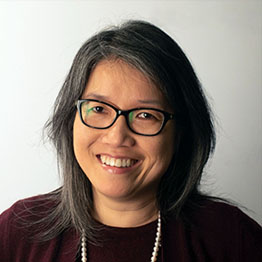 Patricia Moy
Patricia Moy is a political communication scholar who focuses on communication and citizenship, specifically, how mediated and interpersonal communication can shape public opinion, citizens’ social and political trust, and political behavior. Her research addresses communication content, processes and effects across myriad issues in multiple continents Moy has made extensive contributions to the discipline, including serving as president of the International Communication Association, the American Association for Public Opinion Research, the World Association for Public Opinion Research (WAPOR) and the Midwest Association for Public Opinion Research. She was editor of the flagship journal Public Opinion Quarterly, and is currently editor-in-chief of Oxford Bibliographies in Communication.
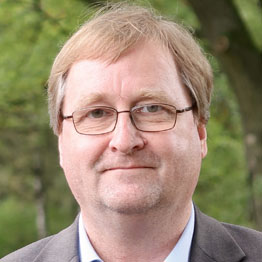 Thomas Petersen
Thomas Petersen has been a research associate at the Allensbach Institute for Public Opinion Research since 1993 and has served as a project manager there since 1999. He has also held teaching appointments at several universities, including the University of Mainz, the Technical University of Dresden, and the Berlin University of Applied Sciences and Economics. In 2007/08, he was a visiting professor of the methodological and historical foundations of political science at the University of Hamburg. He is a former president of the World Association for Public Opinion Research (WAPOR) and serves as spokesperson for the “Visual Communication” section of the German Communication Association (DGPuK). His research focuses on opinion polling methods, field experiments, visual communication, political communication, electoral research, social and market research, and public opinion theory.
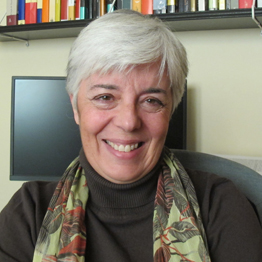 María Dolores Porto
Senior lecturer in English Linguistics at the Universidad de Alcalá (Spain). Her research interest lies in Cognitive Linguistics and its applications to a variety of fields in order to better understand the interactions between language, mind and socio-cultural contexts. She has worked on several research projects on digital and public discourses, and published widely on the framing of multimodal news, digital narratives and social media. Among her most recent publications, “Constructing threat through proximization in digital news” (co-authored, in Discourse and Society 2025) and Polarized Discourse: Language, Cognition and Social Practice (2026, De Gruyter Mouton), co-edited with Isabel Alonso-Belmonte and Manuela Romano.
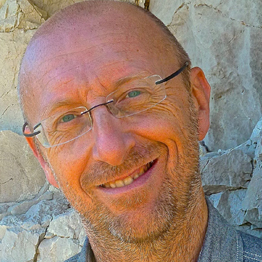 Paolo Rosso
Paolo Rosso is Full Professor at the Universitat Politècnica de València, where he is also a member of the Pattern Recognition and Human Language Technology (PRHLT) research center. His research interests are focused on Artificial Intelligence and concretely on Natural Language Processing and Multimodality: Detection of Disinformation, Hate Speech and Sexism in social media texts, memes and videos. He collaborated with the Spanish Observatory on Racism and Xenophobia (OBERAXE) of the Secretary of State for Migration on monitoring hate speech in social media and on the topic of disinformation with the Oficina-C, the Office of Science and Technology of the Spanish Congress of Deputies, and with the National Department of Security on disinformation campaigns and foreign information manipulation & interference, being one of the coordinators of the chapter dedicated to AI techniques to fight disinformation.
SCHEDULE

Panels with 3 papers have 20 minutes to present and 10 minutes for discussion. Panels with 4 papers have 15 minutes to present and 7 minutes for discussion.
THURSDAY, 18 JUNE
Public Opinion and Social Life
New Theoretical Perspectives for Addressing Public Opinion
Venue: Aula Gamesa, ICS
09:00-09:30 |
Registration |
09:30-10:00 |
Opening Remarks: A Communicative Theory of Society • Teresa Sádaba — Universidad de Navarra • Ruth Breeze — Universidad de Navarra |
10:00-11:00 |
Keynote Lecture Title: Public Opinion in a Fragmented World: Trust, Identity, and the Battle for Shared Reality Patricia Moy — Professor of Communication, University of Washington Introducer: Teresa Sádaba - Universidad de Navarra |
11:00-11:30 |
Coffee Break |
11:30-12:30 |
Keynote Lecture Title: Freedom, Social Control, and the Role of the Mass Media. Why Free Societies Need Moral Pressure Thomas Petersen — Project Leader, Institut für Demoskopie Allensbach Introducer: José Javier Sánchez-Aranda — Universidad de Navarra |
12:40 - 14:00 |
Parallel Sessions Polarization, Media and Digital Public Sphere | Venue: Seminario 0510 ICS |
14:00 |
Lunch (ICS Hall) |
Tribute to Maxwell McCombs and Esteban López-Escobar
16:00-16:55 |
Agenda-Setting Studies in Spain: Intellectual Legacies and New Research Directions • Esteban López-Escobar, Maxwell McCombs, and agenda-setting studies in Pamplona: the forging of the second level, an institutional and intellectual history Rosa Berganza Conde · Juan Pablo Llamas Galaz, Manuel Martín Algarra, Marta Martín Llaguno · Federico Rey Lennon — Universidad de Alicante, Spain • The use of agenda-setting and framing in university research into public opinion and communication Raquel Rodríguez & Carlos Lozano — Universidad Rey Juan Carlos, Spain |
17:00-18:30 |
Honoring Maxwell McCombs and Esteban López Escobar. Memories and Scholarly Legacy • Marta Martín Llaguno — Universidad de Alicante, Spain • Rosa Berganza — Universidad Rey Juan Carlos, Spain • Manuel Martín Algarra — Universidad de Navarra, Spain • Raquel Rodríguez Díaz — Universidad Rey Juan Carlos, Spain • Moderator: Mónica Codina — Director Department of Public Communication, Universidad de Navarra |
FRIDAY, 19 JUNE
Public Discourse and Political Life
Polarization and the Construction of Social Understanding
Venue: Aula Gamesa, ICS
09:00-10:00 |
Keynote Lecture Title: Metaphors and Polarisation in Public Discourse Dolores Porto — Universidad de Alcalá Introducer: Ruth Breeze — Universidad de Navarra |
10:00-11:30 |
Special Panel: Leaders, Publics, and Crisis: Mediated Political Perception in a Polarised Landscape • Observing how Public Opinion takes shape: Tribalism, Framing and Polarisation in Online Forums Ruth Breeze • The Foreign Leader as Political Mirror: News Salience, Mediated Reception and Proxy Discourse on YouTube in Spain and Turkey Mariola Moreno & Melike Akkaraca • Disastrous Governance: Metaphors of Blame, Negligence, and Institutional Responsibility in Spanish and Turkish Newspapers Melike Akkaraca & Ana M. Fernández-Vallejo • Cohesive mechanisms and persuasion in parliamentary discourse: A comparative study of Government and Opposition in Spain and the United Kingdom Dámaso Izquierdo Alegría • Moderator: Paolo Rosso — Universitat Politècnica de València |
11:30-12:00 |
Coffee Break |
12:00-13:00 |
Keynote Lecture Title: Emotional reactions to information warfare and polarization: AI models for the detection of disinformation and conspiracy theories Paolo Rosso — Full Professor Computer Science, Universitat Politècnica de València Introducer: Melike Akkaraca — Universidad de Navarra |
13:15-14:00 |
Civic engagement, values and institutional narratives • Does Religious Commitment Enhance Civic Engagement in Young People? Highlights from the 2023 and 2025 Footprints International Surveys Norberto González Gaitano — Universidad CEU Cardenal Herrera, Valencia • The Extended Socio-Epistemic Model and Its Implications for Public Opinion Paulina Tabery — Public Opinion Research Centre, Institute of Sociology of the Czech Academy of Sciences, Czech Republic • Media Polarization in Entertainment Coverage: The Press Narrative of Spain’s Access Prime-Time Television Battle Alberto López-Carrión — Universidad de Salamanca & UC3M, Spain • Moderator: Dámaso Izquierdo Alegría — Universidad de Navarra |
14:00 |
Closing Remarks Ruth Breeze — Universidad de Navarra |
TOPICS FOR PROPOSAL
Possible topics for proposals include, but are not limited to:
• Media, old and new, effects on public opinion.
• Public attitudes. Role of Emotions in Public Opinion.
• Polarization, extremism, and information disorders.
• Public perceptions. Controversial issues and social perceptions.
• New media effects. Developments of Agenda-setting in the new media context. Developments of Framing studies.
• New Directions in Electoral Campaigns.
• Effects of polls in democracies.
• AI effects on public opinion.
• Challenges to freedom of expression.
• Civic engagement.
One aim of the workshop is to identify and bring together scholars in communication, sociology, and politics concerned about communication research and public opinion studies.
STANDARDS AND INDICATIONS
Abstracts of 200-350 words should clearly and concisely summarize a theoretical argument related to public opinion and democracy.
30
MARCH 2026
Extended Submission Deadline
30
APRIL 2026
Applicants will be notified
80
EUROS
Registration fee
REGISTRATION AND PAYMENT
ORGANIZERS

Teresa Sádaba
Public Communication Department

Ruth Breeze
Institute for Culture and Society

Manuel Martín Algarra
Public Communication Department

Mónica Codina
Public Communication Department

María Fernanda Novoa
Public Communication Department

Aurken Sierra
Public Communication Department

Mariola Moreno
Institute for Culture and Society

Edurne Garde
Institute for Culture and Society

Melike Akkaraca
Institute for Culture and Society

Dámaso Izquierdo
Institute for Culture and Society
This workshop builds on our previous event in 2024, Toward Flourishing: A Theoretical Reset for Journalism, co-sponsored by Western Michigan University’s Center for the Study of Ethics in Society. On that occasion, eighteen scholars from Spain, the United States, and the United Kingdom focused on rethinking the nexus of journalism, ethics, and politics using a broadly Aristotelian framework. A special issue in the Journal of Media Ethics (2025) brought together the main contributions.